Cluster Mechanics and Multiplier Grids Redefine Modern Mobile Slot Outcomes
Ben Vogel · Jun 13, 2026
Cluster Mechanics and Multiplier Grids Redefine Modern Mobile Slot Outcomes
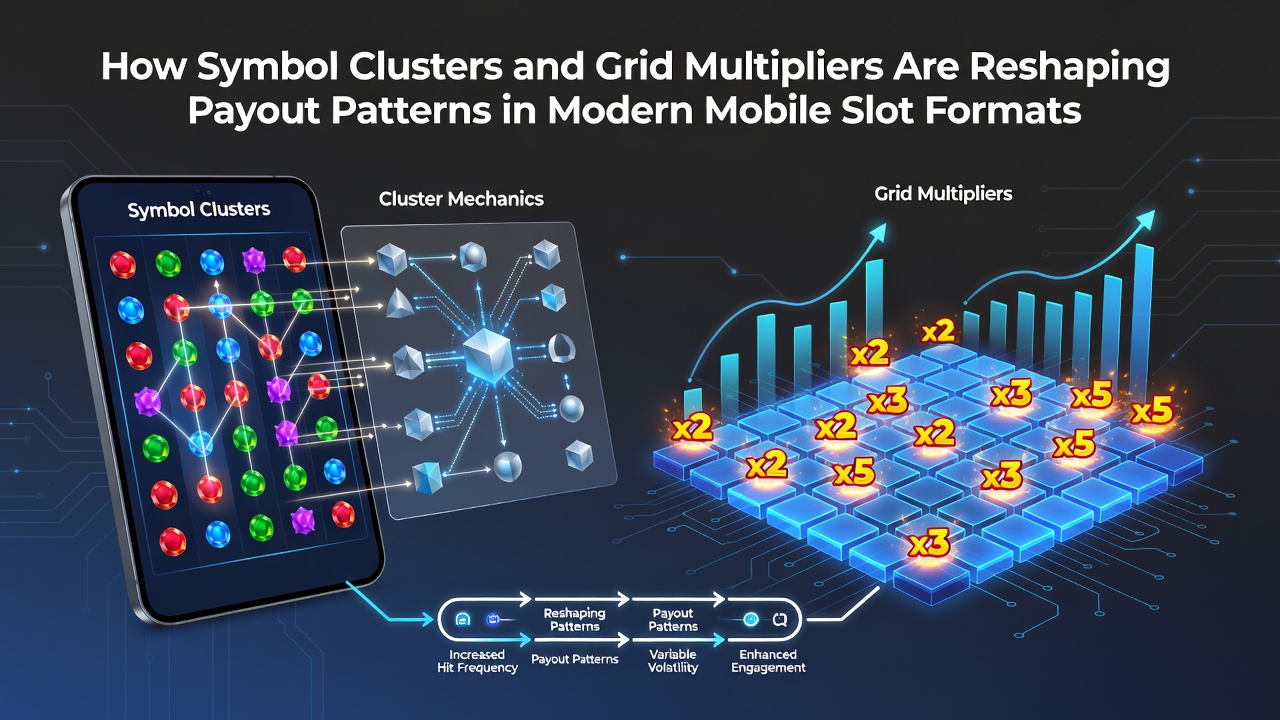
Symbol clusters and grid multipliers have shifted payout structures in mobile slot formats by replacing traditional payline systems with adjacency-based wins and layered bonus multipliers. Game developers design these mechanics to trigger when identical symbols form connected groups of five or more on the grid, while multiplier values attach to specific cells and combine during winning sequences. Data from June 2026 shows increased implementation across major mobile platforms, with cluster formations accounting for a larger share of total returns to players compared to earlier reel-based models.
Mechanics of Cluster Formation in Mobile Environments
Cluster pays operate through grid layouts that typically measure 5x5 or 6x6 cells, where symbols must touch horizontally or vertically to create a qualifying group. Once a cluster registers, those symbols disappear and new ones cascade downward, allowing consecutive evaluations within a single spin. Observers note that this process extends average spin duration while distributing smaller wins across multiple steps rather than concentrating value in one line match. Mobile interfaces optimize these sequences through touch-responsive animations that highlight expanding clusters in real time.
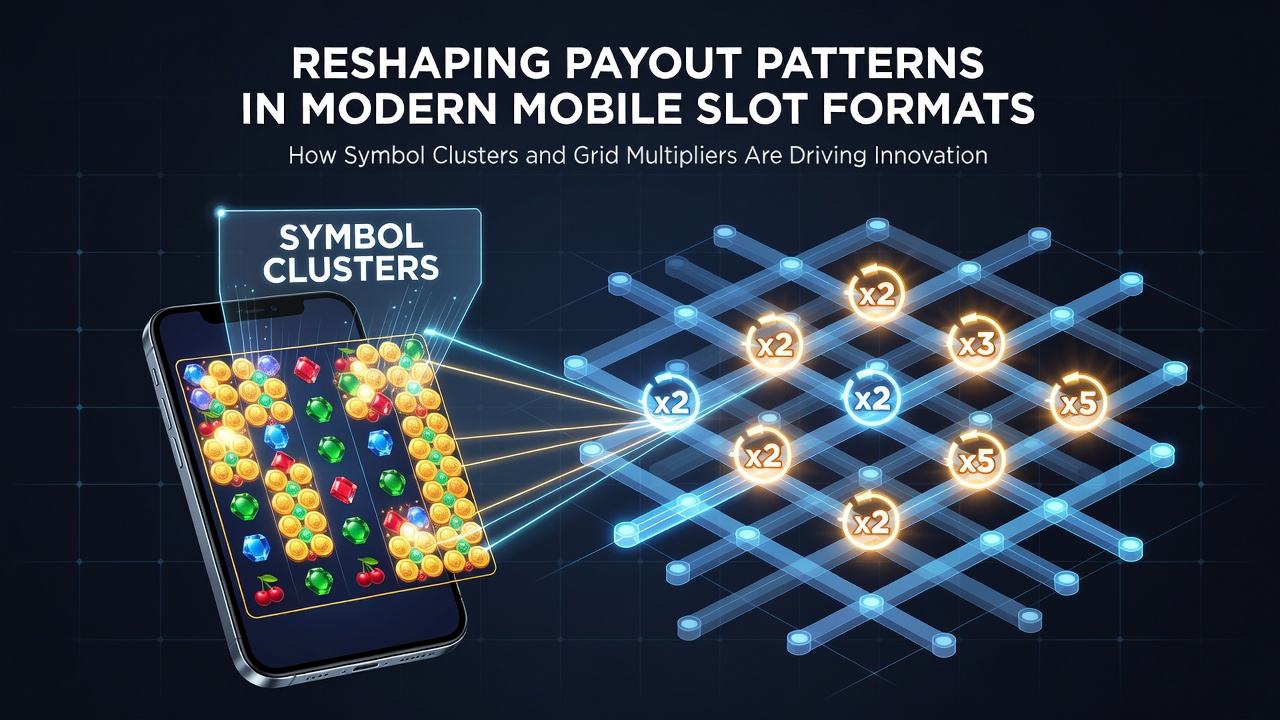
Grid multipliers appear as overlaid values on individual cells or entire rows, activating only when a cluster covers their position. Studies from industry research groups indicate that combined multipliers often reach 10x or higher when several values intersect during a cascade chain. These features interact with cluster removal by carrying forward to subsequent drops, creating cumulative effects that alter base payout percentages over extended play sessions.
Impact on Payout Distribution Patterns
Payout patterns in cluster-based mobile slots show wider variance than fixed payline titles because wins depend on symbol density rather than alignment. Research from the American Gaming Association indicates that games using these systems record higher frequencies of moderate returns interspersed with occasional large cluster explosions. The addition of grid multipliers further modifies these distributions by introducing conditional boosts that activate only under specific spatial conditions.
Engineers adjust return-to-player calculations to account for the probability of multiplier overlap with clusters, resulting in models where base game contributions decrease while feature-triggered portions increase. Figures from Canadian regulatory data reveal that titles incorporating both mechanics maintain overall RTP ranges between 94 and 97 percent, yet deliver those returns through more fragmented win events than older formats.
Technical Adaptations for Mobile Platforms
Developers optimize rendering pipelines to handle simultaneous cluster evaluations and multiplier applications without performance drops on smaller screens. Touch input systems register symbol selections during bonus rounds, allowing players to influence certain multiplier placements in interactive features. Battery and data usage metrics from June 2026 deployments demonstrate that optimized cluster animations consume comparable resources to traditional spinning reels when properly coded.
Integration with progressive jackpot networks occurs through separate multiplier pools that accumulate across linked mobile titles. When a qualifying cluster covers designated jackpot cells, the accumulated multiplier applies to the progressive amount, creating cross-game payout pathways that were less common in payline-only designs.
Regulatory Observations Across Regions
Authorities in multiple jurisdictions track how cluster and multiplier mechanics affect player session lengths and spend patterns. The Alcohol and Gaming Commission of Ontario has documented steady participation rates in cluster-format mobile games through the first half of 2026, noting that these titles often appear in operator portfolios alongside traditional reel games. Similar monitoring occurs in the Netherlands, where gamingcommission.nl reports examine multiplier transparency requirements during cluster evaluations.
Australian research institutions have published analyses comparing payout volatility between cluster systems and payline equivalents, finding that grid multipliers contribute measurable increases in standard deviation of returns per 100 spins. These findings assist operators in categorizing games for responsible gambling tools without restricting mechanical innovation.
Future Development Directions
Engineers continue refining cluster detection algorithms to support larger grids and irregular symbol shapes while preserving mobile frame rates. Multiplier systems now incorporate persistent elements that carry between spins under specific conditions, extending feature lifespans beyond single rounds. Data collected through June 2026 indicates sustained investment in these formats by studios targeting international mobile markets.
Conclusion
Symbol clusters combined with grid multipliers have established distinct payout rhythms in mobile slot formats by emphasizing spatial connections and layered value boosts. Technical implementations adapt to device constraints while regulatory bodies across Canada, the Netherlands, and Australia maintain oversight of transparency and volatility metrics. As development continues, these mechanics sustain their role in shaping how returns distribute across mobile gameplay sessions.