Regional Payment Customs Drive Variations in Mobile Entertainment Bonus Designs
Dana Schulz · Jun 11, 2026
Regional Payment Customs Drive Variations in Mobile Entertainment Bonus Designs
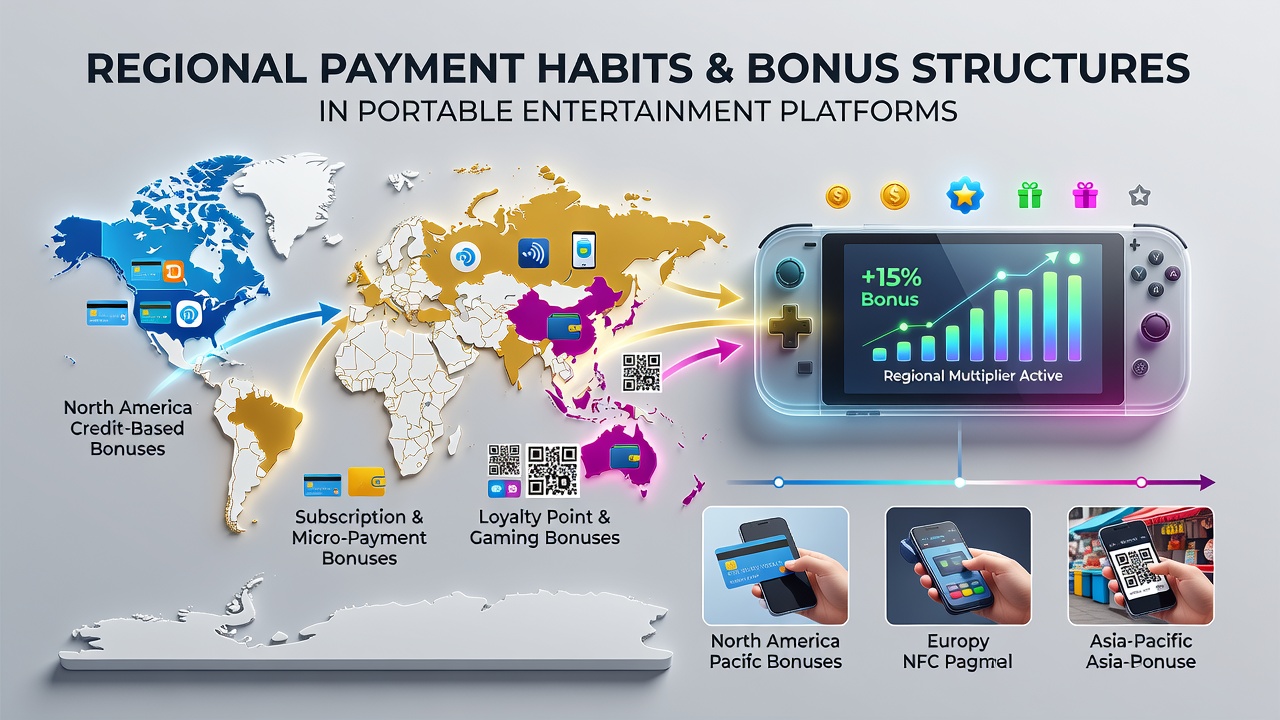
Payment methods vary sharply across continents and these differences directly shape how portable entertainment platforms structure their bonus offerings, from free trial extensions to reward multipliers and subscription incentives. Observers note that companies adjust bonus mechanics to align with dominant local payment behaviors because user adoption rates depend on seamless integration with familiar transaction systems. Data from the World Bank shows that mobile money accounts reached over 1.6 billion globally by late 2025 with particularly strong uptake in sub-Saharan Africa and parts of South Asia where traditional banking infrastructure remains limited.
Asia-Pacific Patterns and Bonus Adaptations
Digital wallets dominate transactions throughout much of East and Southeast Asia and platforms respond by tying bonuses to wallet top-ups or recurring automatic deductions. In markets where QR code payments and super-apps handle the majority of digital spending, entertainment services frequently offer bonus credits that activate only after users complete a wallet-linked purchase. Researchers at the Asian Development Bank documented how these conditional structures increased retention rates in several pilot programs during 2025. Platforms also experiment with tiered rewards that scale according to transaction frequency through specific local gateways rather than international card networks. Such designs reduce friction for users who rarely carry physical cards yet maintain high volumes of in-app activity through integrated wallet systems.
African Markets and Mobile-First Incentives
Mobile money services such as M-Pesa continue to underpin most digital purchases across East Africa and entertainment providers adapt bonus structures accordingly by rewarding deposits made through these channels. One study from the University of Cape Town found that platforms offering instant bonus minutes or extra content unlocks upon mobile money confirmation achieved higher conversion from free to paid users compared with card-only promotions. Because many consumers maintain lower average transaction values but higher frequency, bonuses often appear as small incremental rewards rather than large lump-sum credits. This approach matches spending patterns observed in regions where airtime purchases and utility payments occur daily through the same mobile interfaces.
European and North American Approaches
Credit and debit cards remain the primary method in many European and North American markets although digital wallet usage continues to rise steadily. Platforms in these regions frequently structure bonuses around subscription renewals or bundled service upgrades paid via recurring card authorizations. According to figures released by the European Central Bank in early 2026, contactless and app-based card transactions accounted for over 70 percent of remote entertainment purchases in several member states. Bonus designs therefore emphasize loyalty points that accumulate with each billing cycle or automatic upgrades triggered after a set number of successful card payments. In Canada and Australia similar patterns appear with added emphasis on rewards linked to specific banking apps that offer cashback integration.
Cross-Regional Platform Strategies
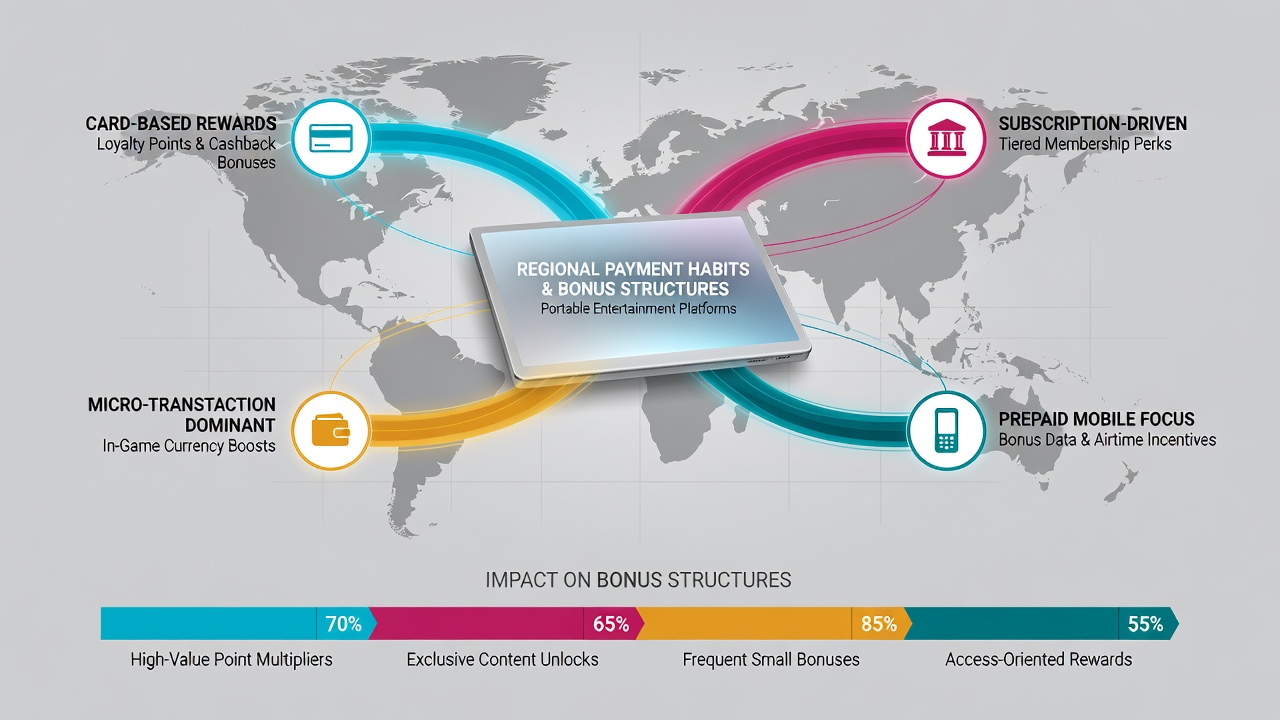
Companies operating across multiple territories maintain separate bonus rule sets that activate based on detected payment method and geographic location. This segmentation allows a single app to deliver wallet-tied rewards in one market while offering card-renewal bonuses in another without creating user confusion. Industry reports from the GSMA indicate that such localization efforts expanded significantly throughout 2025 and into June 2026 as platforms sought to maintain growth amid rising competition. Observers note that mismatched bonus structures often lead to lower engagement when users encounter offers incompatible with their preferred payment rails. Successful implementations instead create parallel pathways where the same underlying content library supports different reward mechanics calibrated to regional habits.
Data and Regulatory Influences
Payment habit data collected by central banks and industry associations informs many of these structural decisions. In June 2026 the Payments Innovation Forum published updated global transaction statistics that underscored continued divergence between cash-heavy regions and those dominated by instant digital transfers. Entertainment platforms incorporate these datasets when designing bonus eligibility rules to ensure compliance with local financial regulations while maximizing accessibility. Researchers emphasize that transparent communication about how bonuses connect to specific payment methods helps sustain trust across diverse user bases. The result is a landscape where bonus architecture reflects not only commercial goals but also the underlying payment infrastructure present in each territory.
Conclusion
Regional payment habits continue to exert measurable influence on bonus structures within portable entertainment platforms as providers calibrate rewards to match dominant transaction methods in each market. Evidence from international financial institutions and academic studies demonstrates that alignment between payment infrastructure and bonus mechanics correlates with higher user retention and engagement metrics. As digital payment ecosystems evolve through 2026 and beyond platforms are expected to refine these localized approaches further while maintaining core content offerings across territories.