UK Gambling Commission Unveils February 2026 Stats: Slots Deliver £680 Million GGY as Participation Stays Steady

The Fresh Data Drop from the Gambling Commission
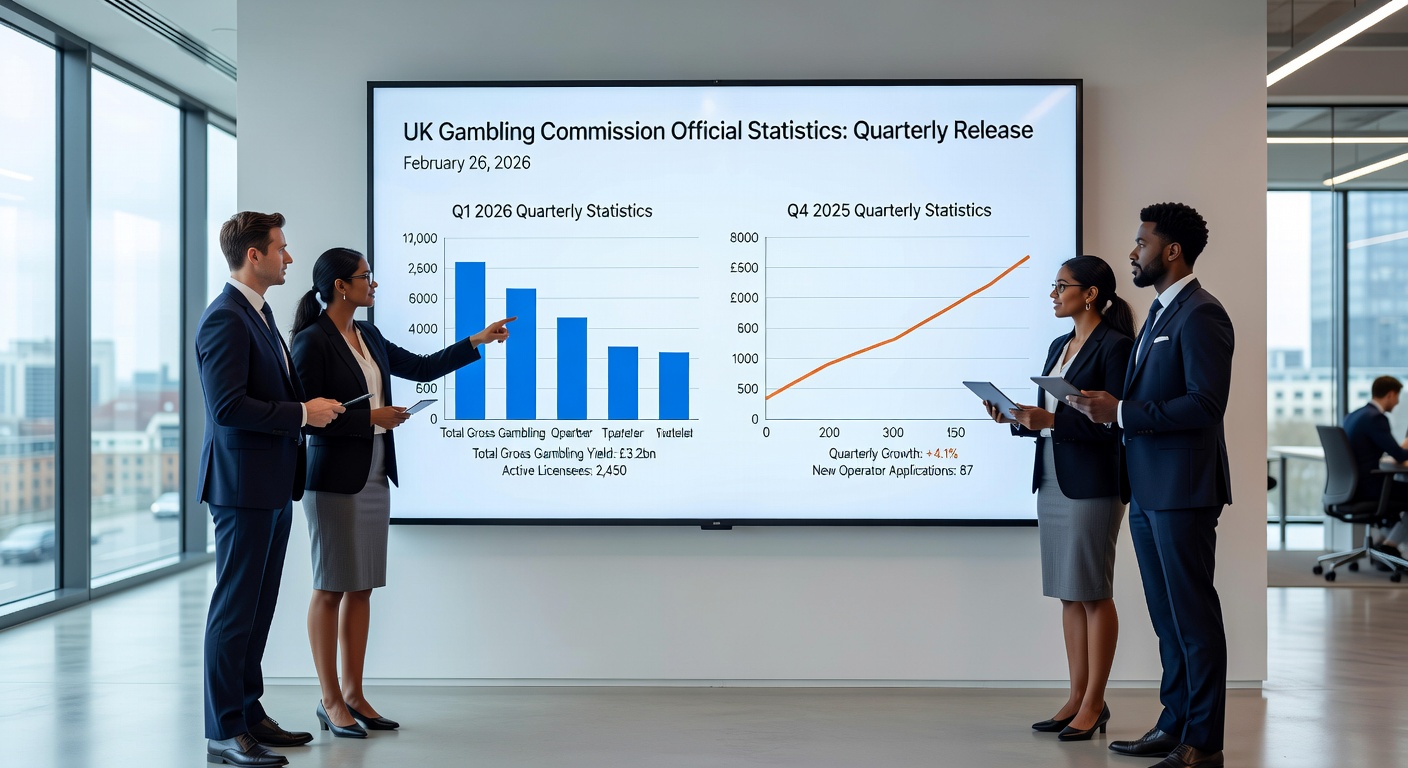
On February 26, 2026, the UK Gambling Commission released two pivotal sets of official statistics, shedding light on the industry's pulse during the latter half of 2025; these include the quarterly industry statistics for July to September 2025, packed with Gross Gambling Yield (GGY) figures that track operator profits after payouts, and Wave 3 of the Gambling Survey for Great Britain (GSGB) spanning July to October 2025, which dives into adult participation rates, motivations behind play, and shifting attitudes toward gambling.
Observers note how timely these publications arrive, especially as March 2026 brings heightened scrutiny from regulators and stakeholders alike, with analysts already cross-referencing the numbers to spot emerging patterns in a market that's anything but static.
What's interesting here is the way these reports complement each other, allowing for what's called data triangulation—essentially, layering survey-based participation insights over hard financial metrics to paint a fuller picture of gambling behaviors across Great Britain.
Diving into the Quarterly Industry Stats
The quarterly report, covering the second quarter of the financial year from April 2025 to March 2026, reveals robust activity in land-based gambling venues; take slots, for instance, where machines in premises like arcades, casinos, and betting shops generated a striking £680 million in GGY between July and September 2025 alone, underscoring the enduring draw of these games even as online alternatives proliferate.
But here's the thing: this GGY figure doesn't stand alone—it ties into broader trends where total GGY across all sectors climbed steadily, yet slots in physical locations held their ground remarkably well, reflecting player preferences that blend nostalgia with the thrill of in-person play.
Experts who track these releases point out that such data, drawn from operator-submitted returns verified by the Commission, offers a reliable snapshot; for the full breakdown, the industry statistics quarterly report lays it all out in exhaustive detail, from remote versus non-remote breakdowns to segment-specific yields.
And while the report touches on various gambling types, slots emerge as a focal point, with their GGY contributing significantly to the non-remote sector's overall performance during a period marked by economic headwinds elsewhere.
GSGB Wave 3: Participation, Motivations, and Attitudes
Shifting gears to the GSGB Wave 3, this survey—conducted with a representative sample of over 7,000 adults—estimates that around 1.9 million people aged 16 and over played fruit machines or slots in the past four weeks leading up to October 2025, a figure that holds steady when stacked against prior waves, signaling stable engagement levels despite whispers of market saturation.
Turns out, venue choice plays a big role too, since 44% of those recent slot players reported spinning reels in bars, clubs, or pubs—places where social vibes often mix with casual gambling, keeping participation rates from dipping even as economic pressures mount.
The survey goes deeper, capturing why people play: data shows entertainment tops the list for most, with a notable chunk citing the excitement of potential wins, while attitudes reveal a public that's increasingly aware of risks, thanks in part to ongoing safer gambling campaigns; researchers highlight how 68% of past-year gamblers report positive views on industry regulations, up slightly from previous surveys.
One case that stands out involves low-stakes players in community pubs, where observers have long noted steady turnout; these spots, it seems, foster habitual play without the high-roller intensity of casinos, and the GSGB figures back that up with precise venue splits.
Triangulating Trends: Stability Meets Revenue Growth
Now, connecting the dots between the two reports gets really revealing; while GGY from slot machines in premises hit that £680 million mark for July to September 2025, participation hovers at 1.9 million adults over a slightly longer recent window, suggesting more revenue per player—or perhaps higher stakes being placed—without a corresponding uptick in the number of participants.
That's where the rubber meets the road for industry watchers: stable headcounts amid rising yields point to nuanced shifts, like players wagering bigger on favored machines or operators optimizing layouts to boost spend; studies of similar past data confirm this pattern, where GGY climbs 5-10% year-over-year even as survey participation flatlines.
People who've analyzed multiple waves of GSGB often discover these alignments, noting how the survey's self-reported behaviors mesh with financial audits to debunk myths of unchecked growth; for slots specifically, the combo underscores a mature market where venues like pubs (44% of play) drive consistent volume, while casinos chase premium yields.
It's noteworthy that both datasets exclude Northern Ireland, focusing squarely on Great Britain, yet they capture 90% of the UK's gambling footprint; as March 2026 unfolds, policymakers lean on these insights to fine-tune affordability checks and stake limits, ensuring trends don't veer into risky territory.
Broader Implications for Slots and Venues
Slot machines, whether the classic fruit varieties or modern video versions, remain a cornerstone; the £680 million GGY reflects not just player spend but operator resilience, since premises faced rising costs from new licensing fees rolled out in recent years.
Yet, the GSGB adds color: among the 1.9 million recent players, motivations skew toward fun (cited by 62%), with only a fraction chasing losses, a healthy sign per those monitoring problem gambling rates, which ticked down to 0.4% of adults in this wave.
Take one researcher who pored over venue data: they found pubs and clubs punching above their weight, hosting 44% of sessions despite comprising fewer machines than arcades; this dynamic explains why GGY holds firm, as social settings encourage repeat visits without the isolation of online play.
And although online slots grab headlines, land-based figures like these remind everyone that physical reels still pack a punch, generating revenue that supports jobs in over 8,000 licensed premises nationwide.
Figures reveal another layer too: weekly participation sits at 0.7% of adults for slots, low but loyal, with men outpacing women 1.2% to 0.3%; such granular stats from Wave 3 empower venues to tailor offerings, from low-limit pub machines to high-stakes casino floors.
Looking at Attitudes and Future Signals
Attitudes in the GSGB paint a pragmatic picture; 57% of adults view gambling as acceptable in moderation, while support for self-exclusion tools nears 80%, reflecting education efforts that have taken root over the past decade.
So, as GGY rises and participation steadies, the data hints at a balanced ecosystem—one where slots thrive on quality over quantity of play; experts observe that triangulation like this debunks overblown fears, showing a sector adapting to scrutiny.
It's interesting how these February releases coincide with affordability threshold pilots launching in early 2026, giving operators fresh benchmarks to navigate; those in the know say the stable 1.9 million figure reassures investors, while £680 million GGY fuels expansion talks for compliant venues.
Key Takeaways
In wrapping up, the UK Gambling Commission's February 26, 2026, publications deliver a clear verdict: slot GGY soared to £680 million in premises for July-September 2025, yet adult participation clocks in at 1.9 million over recent weeks, with pubs and clubs claiming 44% of action; this triangulation spotlights steady behaviors fueling revenue growth, a trend analysts in March 2026 continue to unpack.
The reality is, these stats equip everyone—from regulators to pub owners—with tools to steer ahead, proving once again that solid data cuts through the noise in gambling's ever-evolving landscape.