UK's Stricter Gambling Rules Set to Squeeze Small Casino Operators as Duty Jumps to 40%

The Regulatory Overhaul Taking Shape
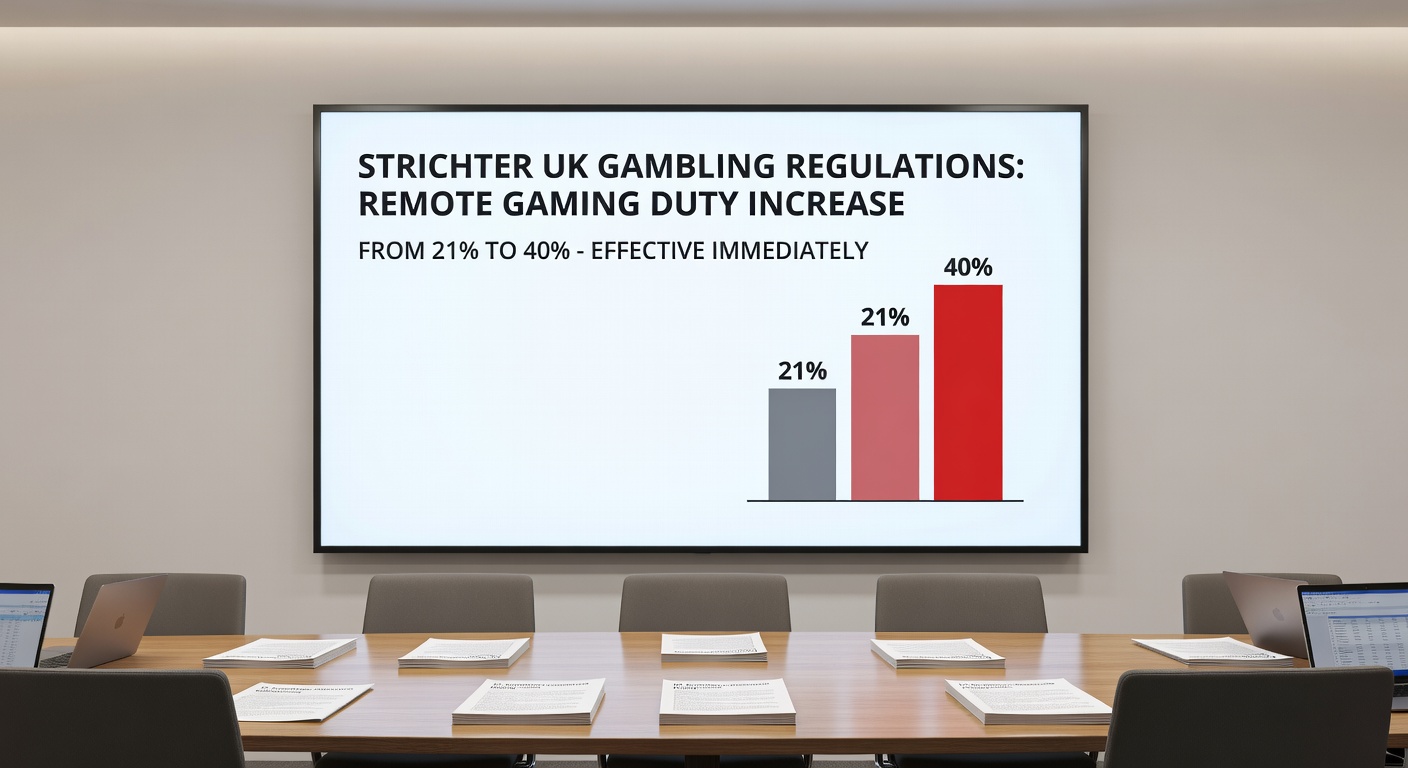
Stricter gambling regulations in the UK, including a sharp rise in the Remote Gaming Duty from 21% to 40% set for April 2026, are placing heavy pressure on smaller casino operators, who face soaring compliance costs alongside affordability checks, marketing curbs, and tougher anti-money laundering measures; larger firms, with deeper pockets, adapt more readily, while independents struggle to keep pace. Data from recent analyses highlights how these changes, overseen by the UK Gambling Commission, aim squarely at player protection, yet they risk reshaping the casino landscape through closures and consolidation. Turns out, as preparations ramp up in early 2026—perhaps even intensifying by March—smaller players find the ball in their court, scrambling for solutions before the tax hammer drops.
Observers note that the duty increase, detailed in official government updates like Changes to gambling duties, targets remote gaming activities such as online slots and table games, hitting operators who rely on digital platforms without the physical casino buffers of bigger chains. But here's the thing: affordability checks demand real-time assessments of customer spending habits, requiring sophisticated software and staff training that small outfits can't easily afford; marketing restrictions ban bonuses for high-risk players and limit ads, drying up customer acquisition just when costs climb. And anti-money laundering rules? They mandate enhanced due diligence, transaction monitoring, and reporting—layers of red tape that demand legal experts and tech upgrades, costs that balloon for those without scale.
One study referenced in industry reports reveals that compliance expenses for these measures could surge by 30-50% for operators under £10 million in annual revenue, figures that larger entities like Entain or Flutter absorb through existing infrastructures; smaller casinos, often family-run or niche online hubs, lack such buffers, leading experts to predict a wave of exits. What's interesting is how this unfolds against a backdrop of post-pandemic recovery, where the sector already contends with inflation and shifting player behaviors, yet regulators push forward with safeguards born from high-profile problem gambling cases.
How Small Operators Feel the Pinch
Smaller casino operators, typically those with fewer than 50 employees or revenues below £5 million, bear the brunt because they operate on razor-thin margins—often 5-10% net profit—leaving little room for the £500,000-plus annual compliance outlays that experts estimate for full adherence; larger competitors, commanding billions in turnover, spread these costs across vast operations, turning potential pain into mere inconvenience. Take one regional online casino group in the Midlands, as detailed in a Pound Sterling Live analysis, which reported a 25% drop in viability projections post-duty hike announcement, prompting talks of mergers or shutdowns even before April 2026 arrives.
And it doesn't stop there: affordability checks, rolled out progressively since 2023, now escalate with mandatory frictionless ID verification and spending caps tied to income data, systems that require integrations with credit agencies and AI-driven risk models—tech stacks costing £100,000 upfront for setup alone, according to Gambling Commission guidelines. Marketing restrictions, meanwhile, prohibit inducements like free spins for new sign-ups unless vetted through behavioral analysis, slashing lead generation by up to 40% for budget-conscious operators who once relied on targeted emails or social pushes; anti-money laundering enhancements demand customer risk profiling and source-of-funds verification for deposits over £2,000, processes that tie up staff time and invite fines for slip-ups, with penalties reaching millions as seen in recent enforcement actions.
People who've tracked the sector point out that while big players invest in lobbying and compliance teams—sometimes hiring former regulators for insider edges—small operators pivot to cost-cutting, like trimming game libraries or staff, moves that erode competitiveness; that's where the rubber meets the road, as consolidation looms with giants poised to snap up distressed assets at bargain rates. Research from trade bodies indicates over 200 small remote gambling licenses could lapse by 2027, a trend accelerating as March 2026 approaches with final compliance audits and duty modeling forcing hard decisions.
Player Protection at the Core, But Ripple Effects Spread
The UK Gambling Commission drives these reforms through its ongoing license conditions and codes of practice, emphasizing data-driven interventions like net deposit limits and session reminders, measures that studies link to a 20% reduction in excessive gambling incidents since initial pilots; yet for operators, the implementation falls unevenly, with small firms reporting compliance teams stretched to breaking points—often just one or two people juggling multiple roles. So, while player safeguards strengthen—affordability hubs processing millions of checks monthly—the sector's diversity shrinks, potentially leading to fewer choices and higher odds for surviving giants to dominate.
Experts who've analyzed similar tax hikes in other jurisdictions, like Australia's point-of-consumption levies, observe patterns of market shake-outs where independents exit within 18 months, paving the way for oligopolies; in the UK, this could mean 15-20% fewer active remote casino operators by 2028, per modeling from economic consultancies. But here's where it gets interesting: some small players innovate, partnering with white-label providers for shared compliance tech or niche-ing into low-stakes social gaming, strategies that buy time but demand quick adaptation before the April deadline.
Now, as operators gear up—auditing books in February, stress-testing budgets through March—the pressure builds; Gambling Commission data shows enforcement ramping with 150+ warnings issued last quarter alone, signaling zero tolerance that small operators ignore at their peril. Those who've navigated past reforms, like the 2014 point-of-consumption shift, recall how independents consolidated into mid-tier groups for survival, a playbook repeating now amid whispers of acquisition frenzy.
Market Consolidation on the Horizon
Potential closures ripple outward, with industry forecasts pegging 10-15% of small remote operators at high risk of folding post-April 2026, driven by combined tax and compliance hits equaling 25-30% of gross profits; larger firms, buoyed by diversified revenues from sportsbooks and international arms, eye opportunities, having already scooped up 30 licenses in the last two years according to Commission registries. Turns out, this isn't just theory—one Welsh online casino shuttered early last year citing precursor costs, a canary in the coal mine for what's brewing.
And while regulators tout protections—mandatory stake limits on slots dropping to £2 by October 2026 for under-25s, alongside enhanced self-exclusion tools—the economic fallout draws scrutiny from trade groups lobbying for tiered compliance or duty relief for low-revenue sites. Observers note that without such tweaks, the UK's £15 billion gambling market tilts further toward behemoths, altering competition dynamics long-term; that's the reality, as small operators huddle in forums, sharing hacks like offshore tech pivots (risky under license terms) or outright sales.
Case in point: a Scottish independents' network reported 40% members considering exit strategies, per internal surveys, underscoring how resource gaps—tech, legal, financial—compound under uniform rules not scaled to size. Yet, the Commission's stance remains firm, prioritizing harm reduction data over operator pleas, with quarterly reports tracking efficacy.
Looking Ahead: Adaptation or Exit?
As March 2026 nears, with duty calculators and compliance roadmaps dominating operator dashboards, the sector braces for transformation; small casinos that thrive might do so through mergers, tech consortia, or hyper-local focuses, but many face the writing on the wall—adapt swiftly or fade. Data suggests a more concentrated market ahead, one where player protections solidify even as choices narrow, a trade-off regulators defend with evidence of declining harm rates.
Those monitoring closely expect announcements spiking pre-April—closures, buyouts, perhaps even Commission concessions if lobbying peaks—keeping the story dynamic. In the end, these changes, rooted in safeguarding players, reshape an industry where small operators once added flavor; now, survival hinges on agility amid the squeeze.